SciArt Initiative

  • Mission
  • Program Archive
    • Events
    • Exhibits
    • Residency
    • Colloquium
    • Magazine
  • Mission
  • Program Archive
    • Events
    • Exhibits
    • Residency
    • Colloquium
    • Magazine

Dana & Richelle: Final week!

2/2/2016

0 Comments

 
Dana's update:

Hello, hello!  This week for The Bridge, I sent Richelle three more short texts to illustrate.  Instead of focusing exclusively on my research in these new texts, I decided to take a “myth busters” approach.  I’m debunking three neuro-myths.  I am very much looking forward to see how Richelle decides to put these texts into images!  Here’s a short version of some of the neuro-myth text:
 
Myth 1: Analytical people are left-brained and creative people are right-brained.
 
The entire idea of being left- or right-brained has no basis in science.  Multiple studies have demonstrated that analytical/creative people don’t have any sort of enhancement of connectivity or activity in one select hemisphere of their brain.  Anatomically speaking, the brain does have two hemispheres that are connected by a small area in the middle called the corpus callosum.  However, these two hemispheres are normally equally active in healthy people.
 
Myth 2: I can’t learn anything else because my brain is full.
 
A brain is a plastic, dynamic structure that continues to remodel itself throughout your whole life based on experiences.  Scientists sometimes refer to this as experience-dependent learning.  When you learn or have new experiences, your neurons can change how they connect with each other by strengthening or weakening synapses.  Synapses are synapses across which one neuron sends a message to another.  In general, the more two neurons communicate, the stronger their connection will be.  Your brain strengthens connections it learns are important based on experience, and gets rid of connections it learns are unneeded.  When you’re born, you have a ton of extra connections in your brain because your brain is new and you haven’t refined it yet.  As you get older, experience life, and learn to do things, your brain starts to prune away the synapses it doesn’t need, and strengthen the important ones.  Fun fact: Current research estimates that there are somewhere around 100 trillion synapses in the human brain. 
 
Myth 3: Humans only use 10% of their brains.
 
No! This is so false!  It’s safe to say that your whole brain – or most of it – is working for you pretty much all the time.  Different regions of the brain control our various abilities that keep us alive and functioning.  For example, your brain stem controls basic, critical functions like your breathing rate, temperature, heart rate, etc.  In other words, if you are alive, then your brainstem is working.  Other parts of the brain are responsible for things like thinking, planning, seeing, thinking about what we see, helping us walk, keeping us upright, letting us interpret our environment, and formulating appropriate behavioral responses to what’s going on around us.  Whether or not you actively “try” to think about something, your brain is getting it done.
 
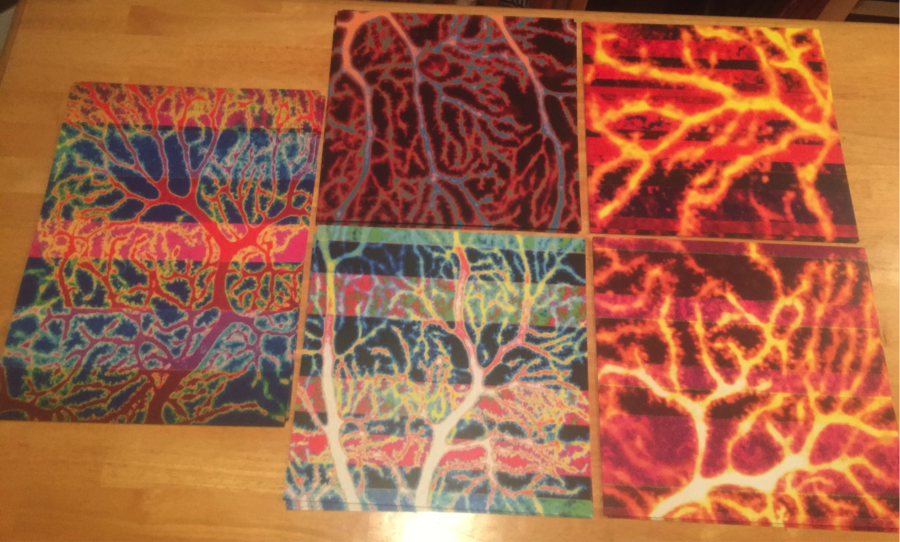
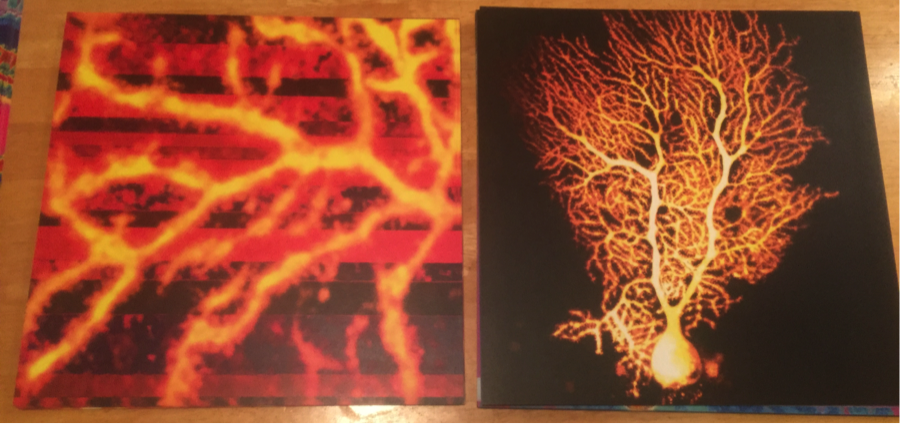
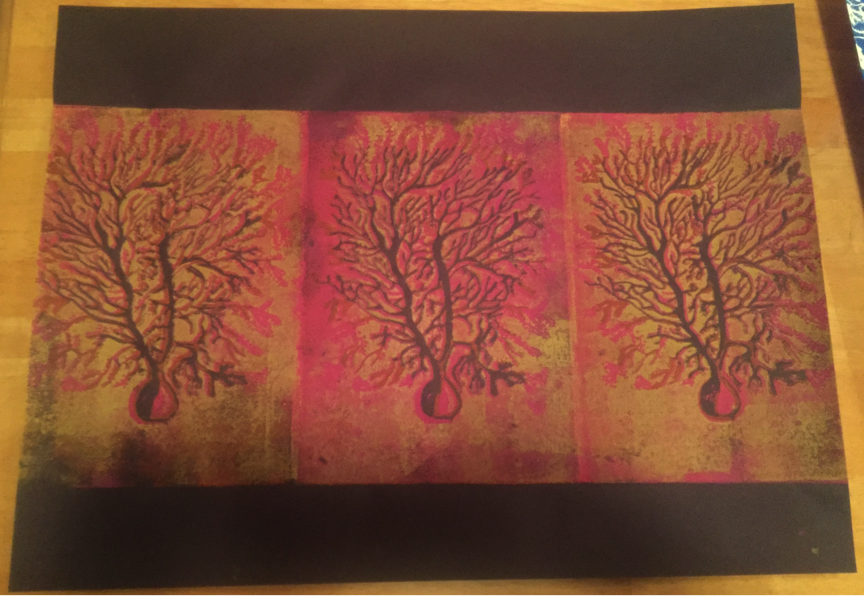
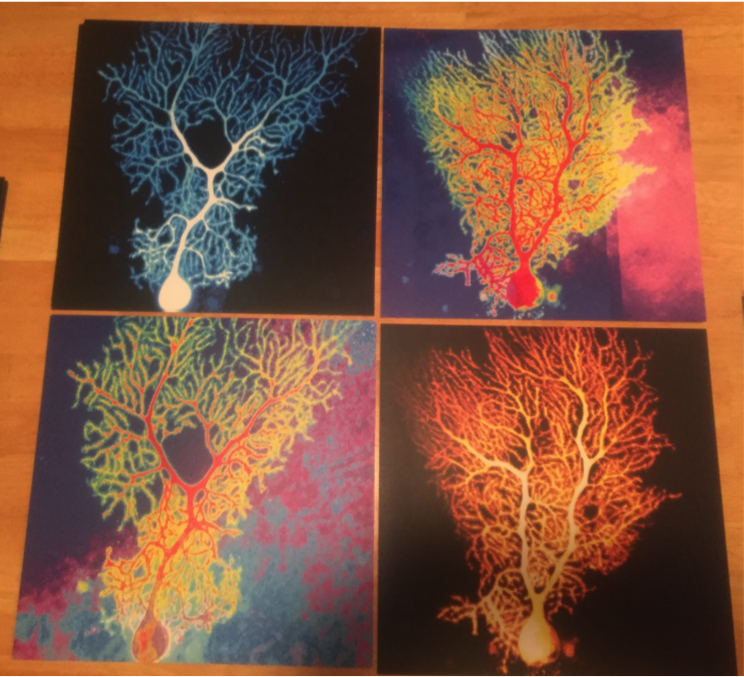
In addition to sending neuro-myth busting text to Richelle, I printed some new Purkinje cells and dendrites to bring to The Bridge Symposium on February 17th.  I’m amazed and excited by all the interest I’ve been getting in these prints! 
 
​Here are some of my digital prints: 
Picture
Picture
Picture
Picture
Richelle’s Update: 

Two more weeks until the Bridge Symposium! Right now I am creating an illustration to her text “What are other examples of the Perkinje pattern in nature?” This is one of my favorite questions to ponder because the branching patterns within the Perkinji cell take place in many social, biological, and technological systems. Dana and I discussed other networks that contain similar structural properties. Some examples include: deltas and streams, Facebook diagrams, tree branches, coral, antlers, lightening, family tree charts, and more. 

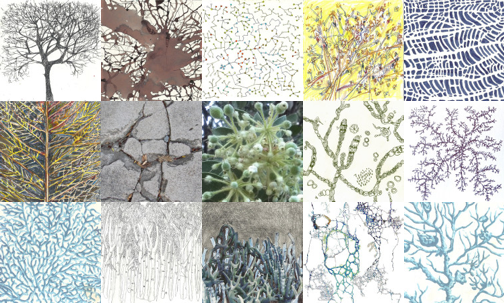
Prior to the Bridge Residency, seeking patterns that connect all life inspired a 365-day project called Networked Life. I believe that by taking a closer look at patterns in nature, we can more closely understand how this design impact our lives as evidenced in networked social relationships, organizational structures, and communication methods. 
Picture
Networked Life, 365-day project illustrating a network per day completed 2013. Here are 15 selected networks that have similar structural properties to the Perkinje cell.
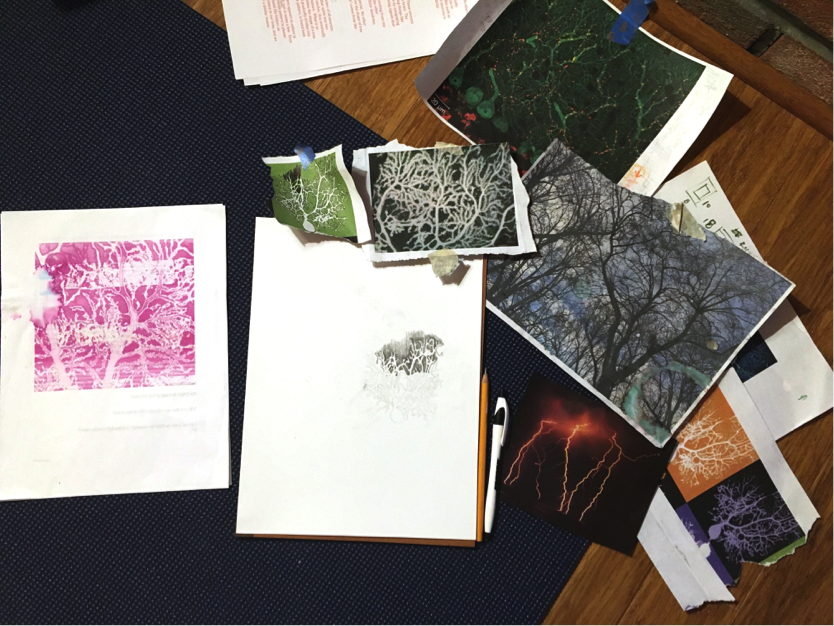
​Below are images of new materials that will be incorporated into a single drawing. I am compiling and layering this imagery together to reveal common formations within disparate topics. I look forward to exhibiting a series of 10 complete drawings at the Bridge Symposium at the School of Visual Arts.  These drawings will also be included in a series of Science-Art pop-up exhibitions throughout Seattle with support from 4Culture.  
Picture
Brainstorming content that looks similar to the architecture of a Perkinje cell.
Picture
Other forms that mimic the Perkinje cell formation.
0 Comments

Your comment will be posted after it is approved.


Leave a Reply.

    GROUP TWO

    Picture
    Dana Simmons
    Picture
    Richelle Gribble

    RSS Feed

Powered by Create your own unique website with customizable templates.