|
Ben's update Last week Paz wrote that “the representation of ecological invisible data, of hypothetical open access, is nowadays one of the great dilemmas to solve.” I love the term “invisible data” because it implies the need for visualization and sounds like something invented in a secret government lab that will escape and wreak havoc in a generic Midwestern town. Perusing through some of the other blogs in the Bridge program, I see that information visualization is a common subject of investigation, especially with the deluge of data available online— data with “hypothetical open access” as Paz puts it, leaving room for secrecy and incompetence. Paz and I had scheduled an online chat on Wednesday morning, and when we had to postpone, I was relieved that my collaborator in Spain didn’t have to see me bleary-eyed and confused as a drank my coffee the morning after the election. The President-elect’s complete disregard for facts is sure to be a major issue in the global scientific community, and science librarian (!) John Dupuis is already chronicling a running list of Trump’s “War on Science.” I don’t know if all activist-artists are teachers, but it sure seems like a big overlap as art’s ability to shape the world relies on awful lot on awareness, education, and community-building. One idea we’re throwing around for The Bridge is a visualization of water data, specifically something that would highlight the dangers of pollution and the wonders of scientific analysis. So I’ve been Googling. There are a surprising number of organizations devoted to collecting data on the planet’s water. The Global Runoff Data Centre (GRDC): “a repository for the world's river discharge data and associated metadata.” The International Water Management Institute (IWMI) has a multi-tiered “water data portal.” Then there is the United States Geological Society’s “ USGS Water Data for the Nation” and Worldwater.org— I could go on (and that’s only fresh water). Many of the websites put forth by these acronymous institutions are confusing piles of individual reports hidden behind imposing drop-down menus. It’s hard to find anything specific, and there’s no overarching story to connect one’s Flow Management Classes to one’s Global Irrigated Area Mapping. As a web designer, I’m offended; as a scientific observer, I see why it’s called “invisible data” and I continue to wish for more democratic ways to share scientific research.  An example of horrendous design obfuscating information (GRDC) Just this week I was talking to a teacher at Penn State about developing a virtual exhibit to showcase 3D reconstructions of archaeological and anthropological artifacts. Databases of 3D models have proliferated among science and art institutions. Perhaps it’s because the technology of 3D printing and scanning is shared so closely with the Maker movement (which idolizes open-access), but the outreach and infrastructure of these projects should really be adopted for other types of data. I’m looking for data that offers widespread utility and could bridge the geographical gap between Paz and me. There’s something comforting about seeing the world’s many rivers on a single line graph; maybe the world isn’t so big after all.  One of my favorites so far is this chart of pH from the 2015 UN Water Quality Report. Water’s fundamental pH of 7 (I’m a homebrewer, remember) is apparently not so concrete.
0 Comments
Paz's update The democratization of invisible information The Earth, a terrestrial laboratory which provides infinite numerical data to reinterpret both science and art, establishes diverse paradigms in the face of communication processes, translation and understanding of the information extracted from a scientifically unqualified public. The understanding of ecological phenomena that can be measured, that is to say, are part of an ecological taxonomy, become a turning point between democratization versus the scientific, political and business control and censorship mechanisms. That is the main reason why the representation of ecological invisible data, of hypothetical open access, is nowadays one of the great dilemmas to solve. The mapping of polluting substances in the atmosphere, for example, which is monitored using technological tools, has led to controversy, as the lack of accuracy and reliability casts doubts over the measurement techniques. Such doubts are caused either by defects on such techniques or, it would seem, by spurious political or business interests. In face of such uncertainty, the lack of authenticity of the invisible data that surrounds us, the option of working with organic mechanisms sparks my interest. These measurement techniques are more intuitive, visual and quite distant from the arithmetic or electronic methods used in weather stations. Thus, I prioritize the biochemical, physiological or morphological changes of the living organism which are associated with exposure to ecological polluting substances. In this experiments, alternative to technology, ecology studies the mutations of nature in the face of alterations in the environmental chemistry thanks to the so called biomarkers and bioindicators of numerous reactions due to exposure to polluting substances.  The interest for observing and democratize that which is “invisible” by obtaining data from nature using organic mechanisms led me to harvest environmental samples during an artistic residency at Casa Tres Patios Foundation in Medellin, Colombia on May, 2015. The objective was to detect environmental bacteria in an artistic space.
The subjects needed to have the attribute of presenting color without been altered by selective-differential means or a chromogenic growth medium (detection of some sort of bacterial enzymatic activity). Additionally, after a period of incubation the colonies acquire a characteristic color typical of certain bacteria. In this case, an unselective mean such as nutritious agar was chosen. Back in Ecuador, at the Microbiology Institute of the San Francisco de Quito University, diverse environmental bacteria the presented coloration were isolated. For a correct identification of the bacteria, the DNA was extracted from isolated colonies and a preserve region of the bacteria was sequenced during the summer for 2015. Conclusions obtained by some of the experiment were the following: − Some of these bacterias showed resilience to the chemical compound toluene at 1μl, 5μl and 10μl concentrations. − Some of these bacterias showed sensibility to the chemical compound phenol at 5μl y 10μl concentrations. At 1μl of phenol, bacteria are resistant. Ben's update
In conversation with Paz this week, I learned a bit more about her work using bacteria as bioindicators for detecting pollutants in drinking water. I’m not sure if using living bacteria is the best way to test water quality, but it’s certainly magical to see microscopic creatures changing color, and I’m intrigued by Paz’s work at the Institute for Microbiology, University of San Francisco de Quito in Ecuador. Last week Paz mentioned the idea of an “air quality monitoring kit” that any citizen could use to test for the presence of certain pollutants. As a designer and activist, I’m curious about the possibilities of such a kit, and wonder what it might look like in the end. Of course, collaborating internationally makes it more complicated to advise the public on helpful resources and practical advice. The other complication is the fact that most serious analysis of drinking water or air quality necessitates access to a highly specialized laboratory. Even the bioindicators Paz has used in the past require modifying the DNA (!) of bacteria to respond to particular stimulus. For the socially-engaged scientist (or sciartist), there seems to be a few ways to connect audiences with the magic of science:
Food for thought. Written by Paz EXPERIENCES ON TRANSDISCIPLINARY ART PRACTICE (ARTSCIENCE) AND TEACHING My collaborator Benjamin Andrew and I have decided to talk more about our previous artwork and how we both share similar interests in the ArtScience field. So this week I am presenting some of my work using bacteria and its aesthetic proprieties as a way to identify the presence of pollutants. I have been teaching and researching in Ecuador for some years and I had the opportunity of working with different scientists and learning from them. I was visiting artist at the Institute of Microbiology University of San Francisco de Quito for more than one academic year. I was permitted to attend microbiology, botanic and biology classes as an auditor, which allowed me to meet with different researchers and also exchange views. I was also able to investigate at this institute every week and I decided to research about an environmental ArtScience project which uses color changing bacteria from the environment as biomarkers to indicate the presence of specific pollutants and create an air quality monitoring kit so any citizen could use it. This represented the first ArtScience collaboration project, not only in this University, but in the whole country.  Institute of Microbiology University of San Francisco de Quito, Ecuador. In this lab they taught me the scientific methods in the fields of clinical microbiology (for instance, clinical urine analysis) and food microbiology (searching for E.coli presence). In the ArtScience field of study, thanks to the help of some of the microbiologists working in this Institute, I was developing the project mentioned before, about the lack of air quality monitoring we breathe, especially in industrial areas, and as result, the lack of information has fostered distrust between citizens and governments.
This is an important problem for many cities and countries and that is why I am working on bioindicators directly expressed through aesthetic chances like colors by using different environment bacterias which I was able to obtain while my artistic residence at Casa Tres Patios Art Foundation in Medellín, Colombia in 2015.
So far we have found that some bacterias are naturally resistant to some toxic chemicals from our environment like toluene and phenol. This is why my interest is focus on the fields of biotechnology, genetics, and/or microbiology as part of the next step to complete this project.  Testing some different bacteria in some chemicals. HOW THE LABORATORY OF ARTSCIENCE STARTED A year and a half after I started working in this university and finally having the support of the Institute of Microbiology, which had invited me on several occasions to participate in conferences to show my research. I managed to convince the Dean of the School of Communication and Contemporary Art (where I was working at the time) to open a course to promote transdisciplinary practices. The requirements were that this course will be offered to all students from the first course to the last year of their degree, we would not have a laboratory (just a small painting studio with a projector and no Internet connection) and there would be no funding to purchase materials. Attendees were a total of 15 students from different careers such as art and performance, photography, painting, medicine, biology, psychology, and film. The contents of this course were divided into five blocks. Practice and theory studies as well as two sessions at the microbiology laboratory, a visit to the Institute of Meteorology, a field trip to help botanists collect photographic documentation, an experiment in the field of design and biology, and lectures from professors of philosophy, medicine, art, microbiology, biology and environmental engineering with a great interest in transdisciplinary projects. Students had to develop two projects: 1. A group work in collaboration with the Department of Environmental Communication: Environmental Protection & Sustainability initiative. 2. Teams of two students to develop an ArtScience project. One from scientific discipline and the other one from humanities.  CONCLUSIONS
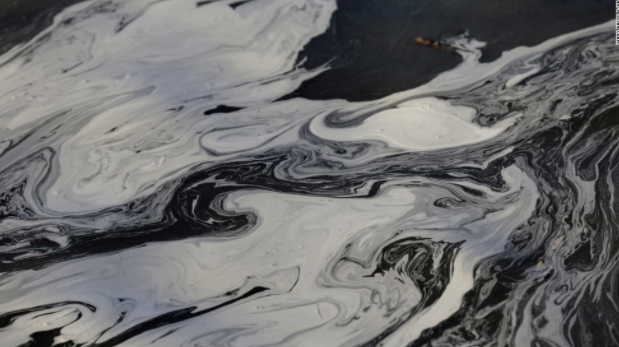 Coal ash spill in North Carolina Written by Ben Last week I wrote about the swirling ecosystem and environmental threats of of Mar Menor and my somewhat less exotic residence in State College, Pennsylvania. Rather than tackle that intercontinental mix of nature, industry, and culture, this week I’ll just ask a single question: what’s in your drinking water? My collaborator Paz Tornero and I have both shared our own local stories of contaminants, and stories of water pollution have hardly left the public eye after Flint, Michigan. The essential right to clean water has come up repeatedly in the American Presidential election, and just recently the chief epidemiologist from North Carolina resigned to protest an ongoing cover-up of toxins leached into drinking water from a 2014 spill of coal ash. Anyone who gets their water from a private well (let’s call them Well People) may get their water tested regularly, but having lived in cities my entire life, I’ve always assumed the water coming out of my kitchen sink was regulated, or at the very least, periodically tested by someone to assure a lack of deadly poisons. Setting aside the issues of trust and oversight for a moment, I was curious what options are even available to someone interested in water quality? And how would you define quality anyway? Thirteen dollar kits are available for testing your water with a variety of color-changing swabs; chemical reactants act more or less like pregnancy tests, except that turning blue could mean you have herbicide in your coffee. These tests are apparently not totally reliable, and won’t give you results as detailed as those garnered from lab work. Luckily you don’t need to be a chemist to get those results, thanks to the high tech solution of pouring water in a plastic tube and mailing it away in a box. Companies like Ward Labs will analyze your water down to the last molecule for a variety of prices, a service I was vaguely aware of from my experience homebrewing beer. Dedicated beer geeks who reach the limits of carefully processing and combining hops, malts, and yeast, can turn to the fourth ingredient of beer (water) to fine tune the flavors and chemistry of their ferments. I’ve never gone to such lengths for my own brewing, even my experimental art beers made with single-strain yeast cultivated from samples of wild microbes. Getting your water analyzed will eventually reward you with a printout listing the proportions of contaminants like herbicide, gasoline additives, lead, coliform bacteria like e. coli, and uranium byproducts. At trace amounts, the aforementioned pollutants are listed as “acceptable contaminants” by the local water authority where I live, which means that low levels of them are just dandy, and separate from aesthetically unpleasant “nuisance contaminants” like chlorides and sulfur. I’m curious how these analysis tools might be used by activist artists like myself and Paz, and how they can be made more accessible, because, let me tell you, the EPA does not make this stuff easy to find. While the EPA website features a map where you can click on your state for local water resources, I eventually found myself downloading an Excel spreadsheet of every accredited water lab in Pennsylvania and their phone numbers, the later of which are the suggested course-of-action for those concerned about their water quality. One of the labs listed for my county was “Coca Cola Refreshments.” As I imagine how this convoluted process could be reinvented or transformed, I’m reminded of the illustrator and saboteur Packard Jennings, whose Pocket Survival Guides have continually made their way into my lectures for art students as a source of inspiration and hilarity. One of the guides even shows how to construct a basic water filter using household ingredients. 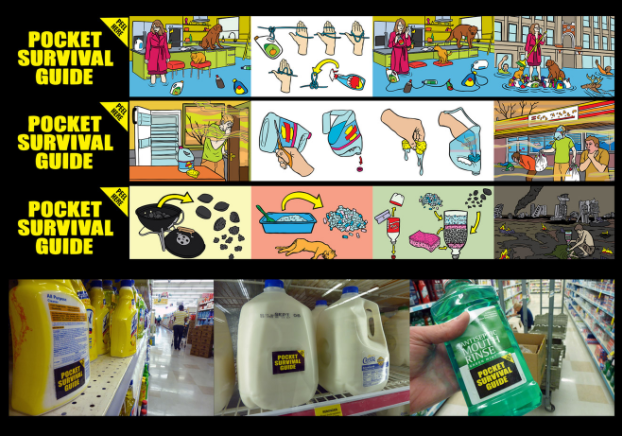 Packard Jennings, Pocket Survival Guides, 2009-11 Where is the line between post-apocalyptic speculation and real-world preparedness? What information is essential for water-drinkers around the world, and how can it be communicated clearly? What data already exists on these subjects and what tools do people already having access to?
 Mar Menor Written by Ben Emails and reports of polluted water are the first things I’ve exchanged with Paz Toreno, my partner for The Bridge virtual residency. Paz is currently working in a city called Murcia on the coast of Southeastern Spain, though she was recently working in Ecuador on a variety of projects at the intersection of art and biology. I, on the other hand, am writing from State College, Pennsylvania: a town utterly dependent on its namesake university, and located in the geographical center of the state. Today was homecoming. We’re both excited about this international collaboration, and will do our best to persevere through tenuous WIFI connections and discover what lies at the intersection of our individual practices and interests. Paz has trained her research and public outreach on a variety of environmental targets, focusing on engaging communities through workshops and activism. Her workshops in Ecuador encouraged active participation in biology, and explored how to use living cells to trace the effects of pollution and customize their DNA for creative purposes. This is well beyond my own experience with biology, which has focused largely on fermented beverages and foods, and gawking at things through microscopes.  Still from Foggy Bottom Microobservatory featuring photography of wild yeast and micronaut. For the past six months, I’ve been developing a project called the Foggy Bottom Microobservatory, as part of the 2016 Foggy Bottom Sculpture Biennial (also including radical gardening by Patrick McDonough and apocalyptic bird algorithms by Krista Caballero and Frank Ekeberg). The Microobservatory served as a platform to engage with local microflora through workshops and wild fermented beer. I collected many, many samples of wild yeast and bacteria, and photographed my specimens to contribute to an ongoing Instagram account. Given our shared experience with microbes and agar plates, Paz and I are considering new ways to explore the chemical and political nature of beer, which has led to a conversation about food as a sort of cultural envoy. Murcia is located around a Mediterranean lagoon, where a thriving ecosystem of fish, birds, and other wildlife contributes to the city’s economic livelihood. Mar Menor is well known for it’s seafood and sea salt-infused cosmetics, which along with other industries seem to be threatening the water systems of the bay with pollutants. Paz is already thinking about how bio-markers and analysis of water could help identify threats to the ecosystem, and I’ve also been thinking about the reliability of water sources lately. Just last week, it was reported that the drinking water in State College and numerous other cities in central Pennsylvania contains trace amounts of chromium-6, a carcinogen that can apparently never be mentioned in print without citing Steven Soderbergh's 2000 film Erin Brockovich (see? I did it too). This, in addition to PA’s well-documented water troubles derived from the fracking of natural gas. I always start projects with a period of research; bulleted-lists and hyperlinks making this style of contemporary art look more like a book report than l'art pour l'art. From this swirling mix of polluted water, sea life, and laboratories, three questions stuck out. They’re from a presentation that Paz gave about her work, and address the exciting possibilities of making activist digital art:
|
Visit our other residency group's blogs HERE
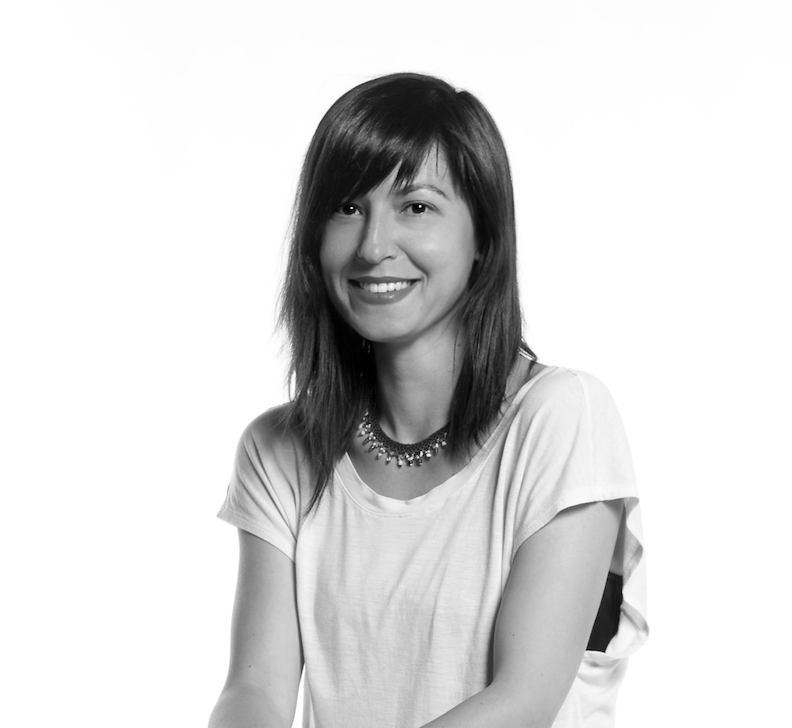
Paz Tornero is an artist, visiting professor at the University of Caldas in Colombia, researcher at the University of Murcia, Faculty of Fine Arts in Spain, and visiting fellow at the Institute of Microbiology (USFQ) in Ecuador.
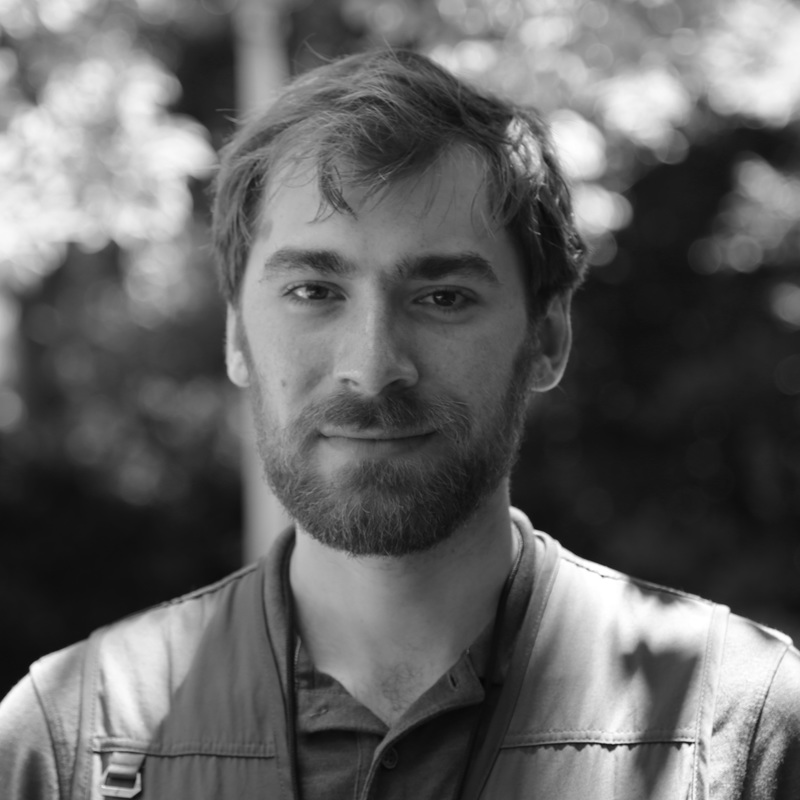
Benjamin Andrew is an award-winning interdisciplinary artist, storyteller, and Instructor at Pennsylvania State University.
|


